The way I see it, there are two kinds of people in the world.
There are those who are active. Who change things. Who affect what’s around them, who make a difference, who shape the world in some way. And there are those who are more passive. Who let things happen to them… who drift.
There’s no judgement in that. Some people are genuinely happy with a quieter life, and that’s their right. But I’ve always been someone who wanted to do things. Change things, and hard work is how you do that.
For me, hard work is time, energy, and effort applied with purpose. It’s the decision not to sit back and let life occur around you. It’s not letting things put you off, sticking with things, getting things completed.
There’s a real buzz at the start of something new. The excitement of possibilities, the energy of beginning. But there’s a different kind of satisfaction when something long, or difficult, or requiring real focus is finally done. That moment of sitting back and thinking: yeah. I did that. I made that happen.
That feeling is one of the rewards of hard work. But it’s not the only one.
The other one is less obvious. Hard work inoculates you. If you’re always applying yourself, always busy with things that matter, you don’t have the spare mental capacity to overthink, to spiral, to sit too long in your own head. I honestly believe a lot of the unhappiness in modern life comes from having too much unstructured time and not enough genuine graft to fill it with. Being busy with purposeful things is good for you, mentally.
Where I got my work ethic
Primarily, from your grandad.
Mike McNamee didn’t leave school with great qualifications. The era he grew up in had a streaming system. Brighter pupils went to grammar school; everyone else went to a secondary modern. He went to a secondary modern, then trained as an instrument technician through an apprenticeship. And from that starting point, through nothing but hard work, he built an entire career.
He put the hours in. Built his reputation. Took on more responsibility. When the opportunities dried up in the UK, he went where the work was. Zambia first, then Saudi Arabia. Made the sacrifices. Kept going. Eventually came back, got in early at a new brewery, worked his way up through it, and retired as utilities manager for one of the biggest breweries in Europe.
All of that through hard work. Nothing else.
But the image that stays with me isn’t the career. It’s the garden.
When they first bought the house I grew up in, there was a huge sloping bank at the back. About six feet of packed earth rising up from the path to the flat garden above. He wanted to be able to walk out the back door onto a patio. So he dug it out.
Wheelbarrow by wheelbarrow. After work, before work, on weekends, during holidays. He filled skip after skip. I remember once the lorry came to collect a skip and couldn’t lift it. He’d packed it too full. So he unloaded half of it by hand and kept going. It took him years to clear that bank. Then he built an extension. Dug a pond. Built a car from scratch at one point.
The only thing getting between him and what he wanted was time, effort, and energy.
That’s the mould I’ve tried to follow.
My own examples
I’ll give you two.
The first is my degree. I started at Cardiff University, too close to home, kept going back to familiar ground instead of building something new. I transferred to Aberystwyth in my second year. Didn’t know anyone on my course; they’d all spent the first year together. Really hard, personally. I spent too much time finding my feet socially and not enough time on the work. Failed my second year. Had to reset it.
Going into my third year, I knew what had to happen. I cut back on the social life, controlled the distractions, put everything into the labs and the library and the dissertation. Most of my third-year marks were first class. The dissertation was first class. I went through a viva, sat down with a panel of professors and talked through my work, and came out with a 2:1 in Biochemistry. A hard science. All through that one concentrated year of applied effort.
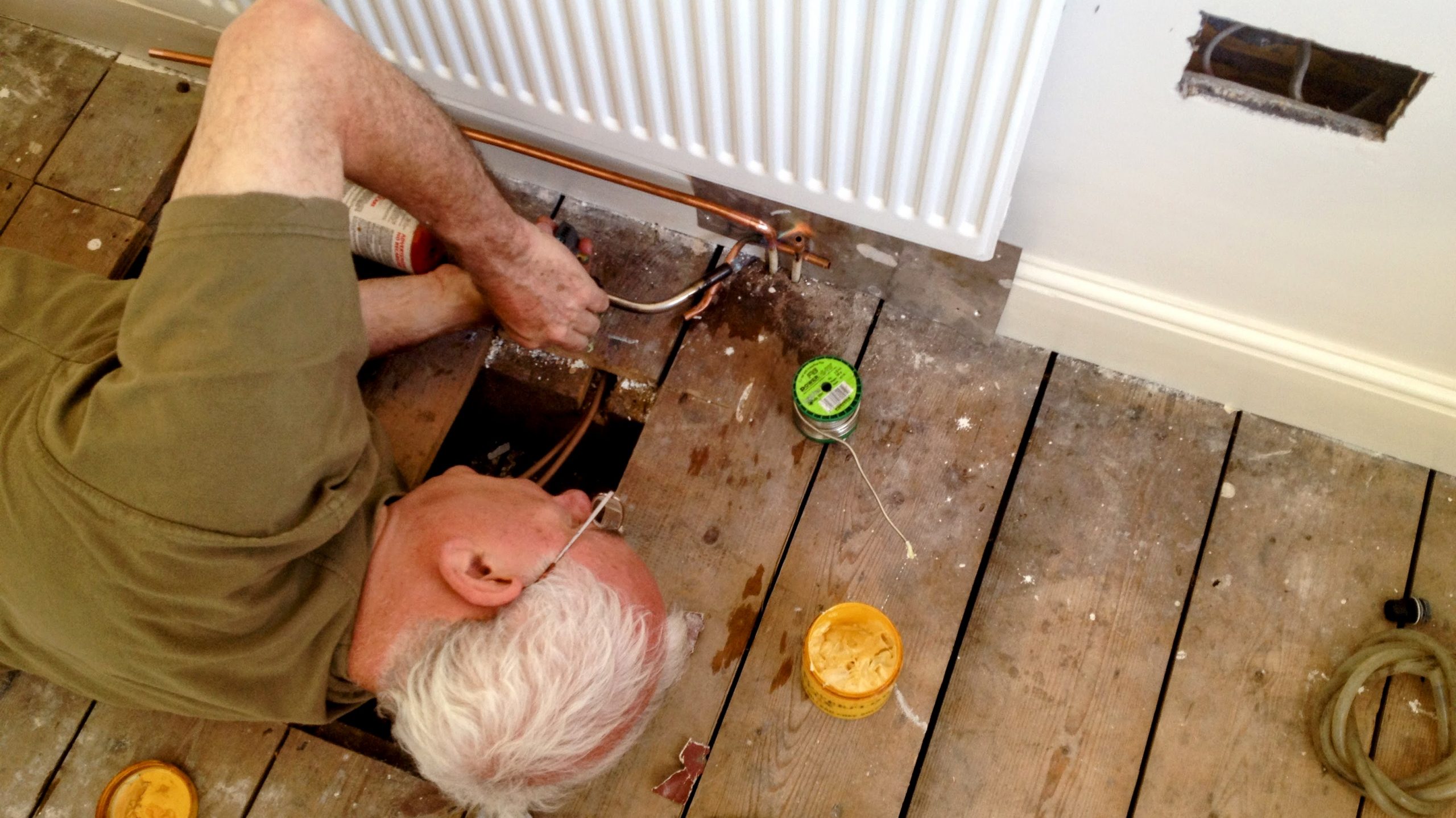
The second is the house. My first solo place was a 1960s semi that hadn’t been touched since the seventies. I lived upstairs for a year while I gutted everything downstairs: rewiring, new boiler, extension, all of it, while working full time. Came home, worked on the house, went to bed, went to work. When I sold it, I doubled my money. The hard work was the investment.
Hard work isn’t just about tasks
This is something I worked out fairly late. In my forties, if I’m honest.
I used to think of hard work as completing things. Getting tasks done. Finishing what you started. And that’s part of it. But hard work has to spread across all of life, including your relationships.
Relationships don’t maintain themselves. Friendships don’t maintain themselves. You have to put the work in. The rewards of doing that are just as real as any professional return: the depth of real friendship, the richness of life around you, the people who show up for you when it matters.
And the flip side: you can work hard at your job and let everything else drift. That’s not a life. The goal isn’t to be a hard worker at work. It’s to be a hard worker at everything. Spread the effort around.
What the Bible says about it
Here’s something I’ve noticed. A lot of what I’d worked out for myself about hard work turned out to be in the Bible all along. I’d arrived at these conclusions through experience, only to find them already written down.
Whatever you do, work at it with all your heart, as working for the Lord, not for human masters.
— Colossians 3:23
Whatever you do. Not a particular kind of work. Whatever it is… do it with all your heart. And the framing matters: you’re not doing it for your boss, or for a grade, or for the salary. Ultimately, you’re doing it for something bigger than all of that.
Do your best to present yourself to God as one approved, a worker who does not need to be ashamed.
— 2 Timothy 2:15
A worker who does not need to be ashamed. The opposite is someone who knows, quietly, that they haven’t given what they could have. Don’t be that person.
Whatever your hand finds to do, do it with all your might.
— Ecclesiastes 9:10
And then there’s the Parable of the Talents (Matthew 25). Don’t bury what you’ve been given. Don’t fail through fear or laziness. Use what you have.
I want to be honest with you about something. There have been periods in my life where I wasn’t a hard worker. Where I drifted, did the minimum, went with the flow. And what I found in those periods was that I wasn’t living to my full potential. I was becoming less than I could be, in work, in relationships, in who I was as a person. The drift was quiet and gradual, which made it easy not to notice.
Getting a grip on that required taking accountability for who I was becoming. And it’s been more intentional as I’ve got older. Hard work isn’t always there naturally. You have to choose it, consistently.
But here’s what I can promise you: I have never, in my life, worked hard at something and felt that the effort was wasted. Every time I’ve genuinely applied myself, there has been a return. Not always the one I expected. But always something.
Be a hard worker, Isaac. Work hard at your job, yes. But also at your relationships, your friendships, your faith, your community. Spread the effort. That’s where a full life comes from.
Work smarter, by all means. But work hard too. Both.
Related: Letter 2: Be Nice… Love