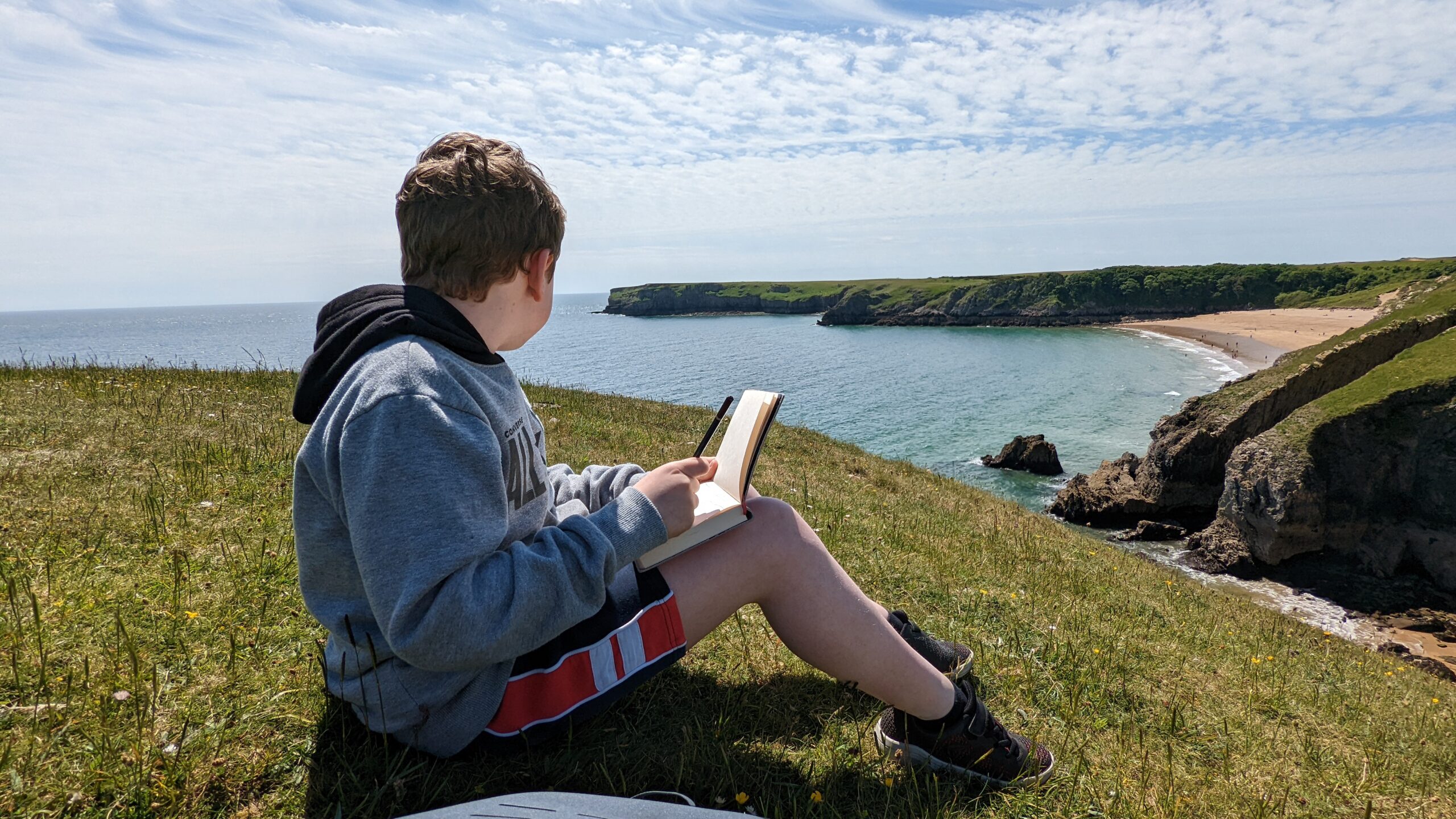
Mystery creates wonder, and wonder is the basis of man’s desire to understand.
— Neil Armstrong
I remember the first time I tried to build a model to predict how people behave in high-stakes decisions… when to make a major financial move, or step into a life-changing career choice. The data was extensive, the algorithms were reliable, and the compute was more than capable. And yet, there was always a gap between the probability of what someone might do and the reality of what they actually chose.
At first, I saw it as a limitation… something to refine or explain away. But over time, it became something far more interesting. That gap began to look less like an error in the model and more like a reflection of something deeply human… the presence of choice that resists full prediction.
This, for me, became the most important part of the work. Not a flaw, but a boundary. Data science can estimate behaviour with remarkable accuracy, but it never quite captures the final moment of decision. There is always something left… a small, unpredictable element that refuses to be reduced. Once I noticed it, I began to see it everywhere.
Where data science and faith meet
Data science begins with what can be measured. It asks whether a model is accurate, whether the data supports a given hypothesis, and how confident we can be in the results. Even at its best, however, it speaks in probabilities rather than certainties. Confidence intervals, assumptions, and margins of error are not exceptions… they are part of the structure.
Faith begins from a different place. It concerns itself with trust, belief, and hope… things that do not sit neatly within measurement or calculation. On the surface, the two appear to stand in opposition: one grounded in evidence, the other in mystery.
In practice, the relationship is more nuanced.
The deeper I have gone into data science, the more I have found that additional data does not always produce greater certainty. More often, it produces a clearer understanding of the limits of what can be known. At the same time, faith, which begins in uncertainty, can lead towards something stable and enduring… not certainty in a technical sense, but a grounded sense of conviction.
In that way, the two do not conflict so much as converge. One begins with evidence and encounters mystery; the other begins with mystery and grows into something that can be lived and relied upon.
Why this matters now
The pace of development in AI has brought these questions into sharper focus. The challenge is no longer simply what we are capable of building, but how those capabilities are used.
Questions around data collection, bias in machine learning, and the balance between personalisation and surveillance are no longer abstract concerns. They shape real systems with real consequences. Decisions made during development can affect fairness, access, and opportunity at scale.
This is where a framework of values becomes essential. Whether rooted in faith or a broader moral philosophy, it provides a basis for asking difficult questions early… before systems are deployed and impacts are felt.
We have already seen examples of what happens when those questions are overlooked. Facial recognition systems, for instance, have been shown to perform less accurately on darker skin tones, leading in some cases to wrongful identification and arrest. These outcomes were not typically the result of intentional harm, but of incomplete consideration. The absence of an ethical lens allowed issues to persist until they became visible in the real world.
An ethical framework does not prevent progress. It shapes its direction.
What the compass is
For me, that framework is faith. It does not replace the technical work, nor does it sit in opposition to it. Instead, it provides a grounding context for how that work is approached.
It prompts questions that sit beyond performance metrics: what is this for, who does it serve, and what are the consequences for those affected by it. These are not always easy questions to answer, but they are necessary ones.
Data science has trained me to be precise about what I claim to know. Faith has shaped how I think about what should be done with that knowledge. Over time, the two have not competed for space but have informed one another in ways I did not expect.
This site is, in part, a record of that ongoing interaction. Not as an argument or a conclusion, but as an exploration… an attempt to understand how these domains coexist within a single way of seeing the world.
The gap between probability and choice remains, for me, the most compelling part of it all. It is a reminder that however far our models advance, there is something about human decision-making that resists complete explanation.
And that, perhaps, is not a problem to be solved, but something to be understood.