I have to start with an apology, Isaac.
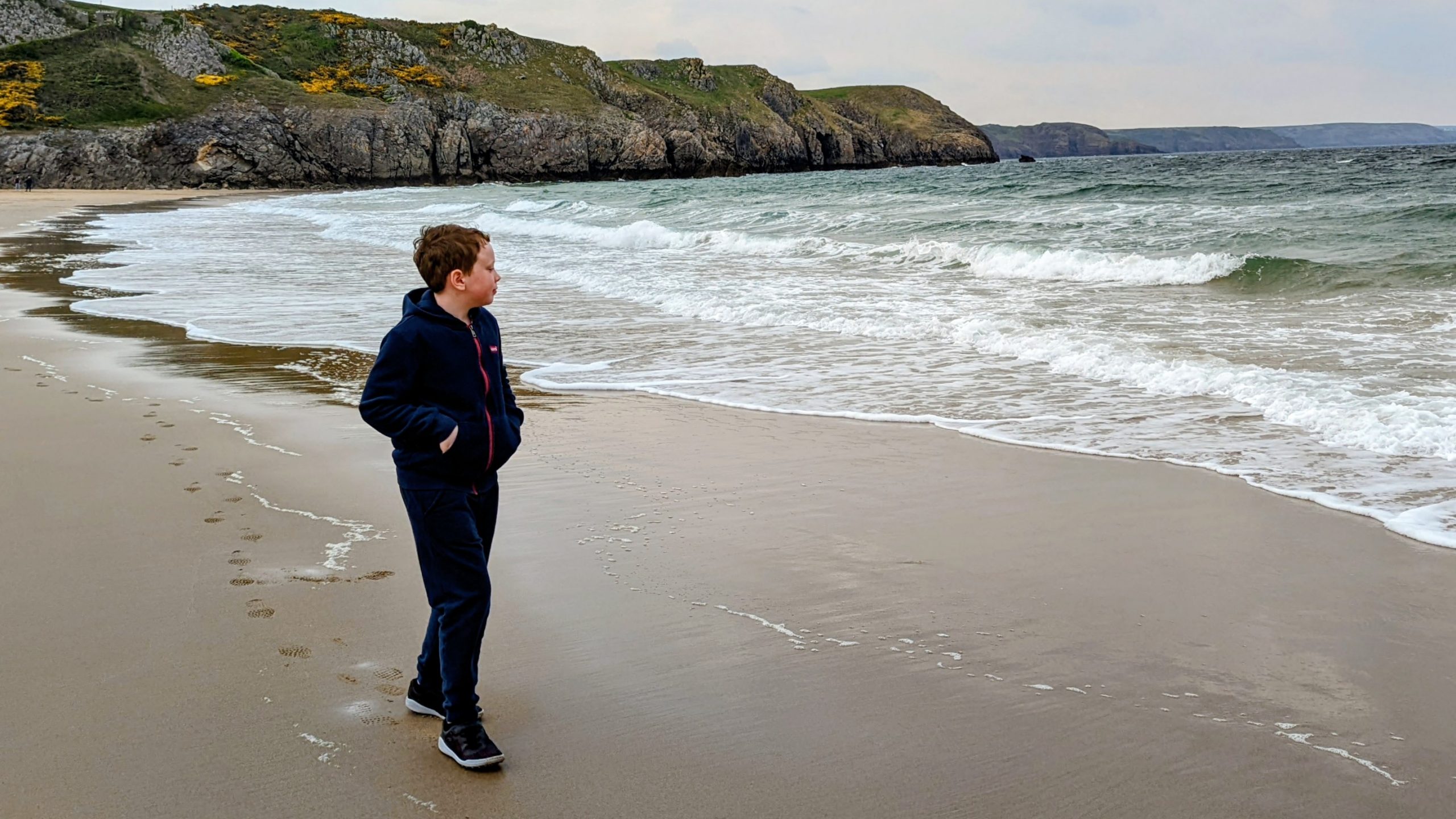
I was already on the road back when you were getting off the bus in the Brecon Beacons. I wanted to be there. I wasn’t. And given the theme of this particular letter… I hope you can forgive me.
Forgiveness. Rule 5.
What forgiveness is (and isn’t)
The dictionary says it’s a conscious, voluntary decision to let go of resentment, anger and the desire for vengeance toward someone who has wronged you. An internal process aimed at personal healing and peace of mind.
But what it isn’t is just as important. Forgiveness isn’t forgetting. You can forgive someone and still remember what they did, and make sure you don’t put yourself back in the same position. It isn’t excusing what happened, or pretending it was fine. It isn’t necessarily reconciliation with the person who wronged you. And it doesn’t deny justice, if justice is what the situation calls for.
Why you forgive
The counterintuitive truth about forgiveness is that you do it for yourself, not for the person who wronged you.
When you hold onto resentment, you’re not hurting the other person. You’re keeping a permanent reminder of the hurt alive inside yourself. There’s a phrase I’ve come back to many times: unforgiveness is like drinking poison and expecting the other person to die. It doesn’t hurt them. It damages you. They may be entirely unbothered. You’re the one being corroded.
This one connects closely to Rule 2, love. But it’s harder, because love at least gets to choose where it goes. Forgiveness doesn’t always have that option. You don’t choose who you’ll need to forgive. I think that’s why it’s among the hardest things faith asks of us. It’s what love looks like when it costs you something.
The hardest version
The hardest version of this rule is that it applies even when the other person hasn’t apologised, hasn’t changed, and probably never will. No reciprocal gesture. No earned absolution. You choose, entirely on your own, to let it go.
But here’s what I’ve learned: being able to say to someone, calmly and clearly, “I know what you did, I know you’re not particularly sorry, and I forgive you anyway”… that’s not weakness. That’s one of the strongest positions you can be in.
A story
When I was about nineteen I was in a relationship with someone I thought I was deeply in love with. I found out that she and one of my close friends, Pete, had developed something they shouldn’t have. I was furious. Completely betrayed. Not just by her, but by him.
The problem was that Pete was the brother of one of my best friends, Steve. And he worked for Sam, who I was also close to. So cutting Pete out wasn’t clean. It dragged into my friendships. There were awkward silences and uncomfortable moments for years. And Pete, for his part, was never particularly sorry.
So I held on to it. For a long time.
Then one evening, Sam was doing a gig and another DJ let him down at short notice. The only person he could get to cover was Pete. And Pete didn’t drive. Sam needed me to take him.
I thought about it. And then I decided: I could keep holding on to this, let it poison my friendship with Sam, or I could do what I thought was right, help him out, and let it go.
I drove Pete to the gig. We didn’t talk much. But I did it. And gradually, things settled. My relationship with Pete never fully went back to what it had been. But it stopped being a wound. I stopped drinking the poison. And life was better for it.
On forgiving yourself
There’s a version of this that applies to yourself too, Isaac. Some of the things I carry guilt about are choices I made when I knew better. And I’ve come to think I should be kinder to myself about those. Jesus forgives me. Other people have forgiven me. Maybe I should forgive myself more readily too.
Cancelling the debt
Think of forgiveness like cancelling a debt. Someone owes you something they can’t repay. You can keep asking for it, let it be the background hum of every interaction, or you can write it off. Say it’s done. They might think they got away with it. But you’re not carrying it anymore.
And if they come back asking for more, not-forgetting kicks in. You can say no. The debt being cancelled doesn’t mean you extend more credit. Wise and forgiving aren’t opposites.
Something that happened with my dad
Not long after I passed my driving test, I borrowed my parents’ car and drove it down to Cornwall with a group of friends. My dad had said not to. The car wasn’t reliable enough for that distance. I ignored him.
On the way back, heavy rain, the car broke down on the side of the road. No mobile phones back then. We knocked on a stranger’s door. I rang my dad and had to explain exactly where we were and why.
He drove two hours in the dark to come and find us. Towed the car home.
He didn’t say anything that night. The next morning he came and told me he was disappointed in me. That was harder to hear than any shouting would have been. And then he told me he loved me and he forgave me.
I was still allowed to use the car after that. I almost never did. I didn’t feel like I deserved to.
That moment gave me a level of respect for my dad that I’ve never lost.
What the Bible says
“Bear with each other and forgive one another if any of you has a grievance against someone. Forgive as the Lord forgave you.”
— Colossians 3:13
“For if you forgive other people when they sin against you, your heavenly Father will also forgive you. But if you do not forgive others their sins, your Father will not forgive your sins.”
— Matthew 6:14-15
That last one is uncomfortable. It’s one of the harder things Jesus said. Worth sitting with.
And from the Lord’s Prayer, the prayer Jesus himself taught us: “Forgive us our trespasses, as we forgive those who trespass against us.” It’s right there in the middle of the most important prayer in Christianity. What we receive is connected to what we give.
Jesus was once asked how many times we should forgive a brother who wrongs us. Seven times? He said: seventy-seven times. The number isn’t the point. There isn’t a number.
One more story
I want to tell you about a woman called Corrie ten Boom. She was Dutch, a Christian, and she survived the Nazi concentration camps. She lost family members there. Years later she was speaking at a church about forgiveness when, at the end of the service, a man approached her. He had been one of the guards at the camp. He’d since become a Christian and was seeking her forgiveness.
She shook his hand.
Everything in her wanted to refuse. But she reached out anyway. And she describes the forgiveness not as something she felt in that moment, but as an act of will, and a prayer, and something that followed from both.
I think about that story often.
A few other voices
“The weak can never forgive. Forgiveness is the attribute of the strong.”
— Mahatma Gandhi
“To forgive is to set a prisoner free and discover that the prisoner was you.”
— Lewis B. Smedes
“Forgiveness is not an occasional act; it is a constant attitude.”
— Martin Luther King Jr.
Don’t hold on to things, Isaac. Forgive people. We’re all only human. We all make mistakes. We do the best we can. You can’t change the past. But you can choose not to let it contaminate what comes next.
I’m looking forward to hearing about the Brecon Beacons.
Forward. Always forward.
Love, Dad.
Related: Letter 4: Strive… Keep Moving Forward | Letter 2: Be Nice… Love